How Dindigul Biryani Is Made
Dindigul is a town in Tamil Nadu with a biryani of its own, and it is not a variation on the Hyderabadi one. Different rice, different fat, different spices, and a method that does not layer anything. This is how the style is cooked.
We serve it here as our Thalapakatti chicken and mutton biryani, which is the name this style is known by. What follows is the traditional Dindigul method, written at home-kitchen scale — the regional technique that food writers and Dindigul households have documented for decades.
It is not any particular restaurant's recipe. The Dindigul Thalappakatti restaurant's own masala has been that family's since 1957 and has never been published; anyone offering it to you is guessing. This is the style, which is a different and much older thing than one kitchen's version of it.
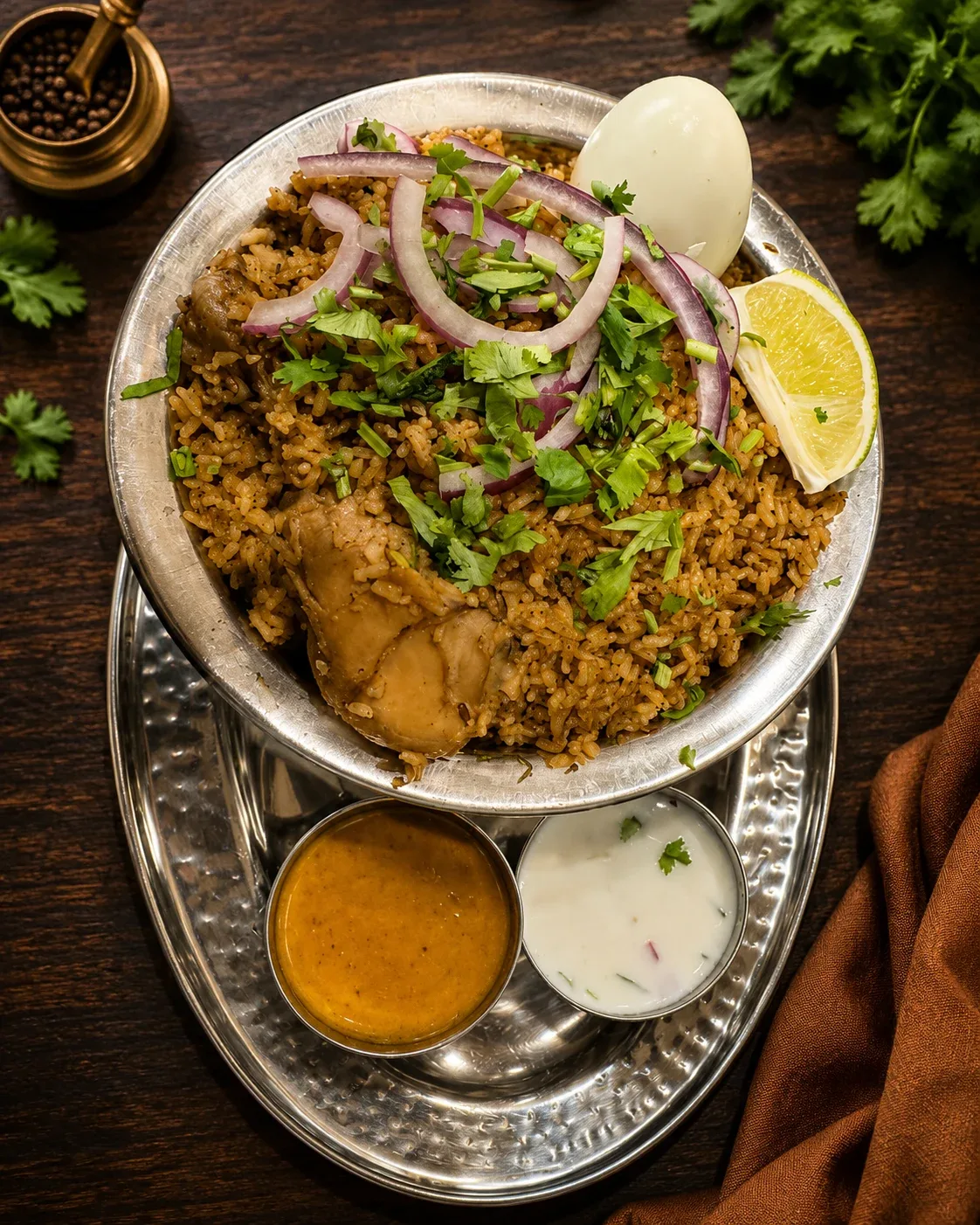
What makes it this biryani
Five things that are not optional
Seeraga samba, not basmati
A short, dense, almost round grain named for its resemblance to cumin seed. It absorbs far more than basmati for its size and never lengthens, so the finished biryani is tight and heavy rather than loose and fluffy. Substitute basmati and you have made a different dish — this is the single change that stops it being a Dindigul biryani.
The rice cooks in the meat
Hyderabadi biryani layers par-cooked rice over marinated meat and seals the pot. Dindigul does not layer at all. The mutton is cooked first, and the raw rice goes into that stock to finish, so every grain takes the flavour from the inside rather than from a layer above or below it.
Kalpasi, and a masala that is ground
Stone flower — kalpasi, or dagad phool — is the lichen that gives Tamil Nadu biryani its particular earthy back-note, and it is the spice most often missing from versions cooked outside the region. The masala is wet-ground to a paste rather than shaken in as powder.
Shallots, not onions
Small South Indian shallots, sweeter and sharper than a large onion and worth the extra work of peeling them. They break down into the gravy rather than staying in strands.
No colouring
The colour comes from the spices and the browned meat, which is why a correctly made Dindigul biryani is brown rather than the orange or yellow many people expect. Nothing is added to make it look like anything.
Ingredients
Serves four
The rice
- 500 g seeraga samba rice
- Water or mutton stock, about 1½ cups to each cup of rice
Seeraga samba takes less soaking than basmati — twenty minutes is plenty, and an hour makes it mushy. The ratio is lower than you would use for a long grain because the pot finishes covered and loses little.
The meat
- 750 g goat mutton, on the bone, cut small
- 150 g thick curd (plain yogurt)
- 1 tbsp ginger–garlic paste
- ½ tsp turmeric
- 1 tsp salt
On the bone is not a preference, it is where the stock comes from, and the stock is what the rice cooks in. Shoulder and leg both work; ask for it cut small, around 4 cm. An hour in the curd is enough and overnight is better.
Whole spices
- 1 piece kalpasi (stone flower), about a thumbnail
- 2 star anise
- 1 small stick cinnamon
- 4 green cardamom
- 4 cloves
- 1 blade mace
- 1 bay leaf
- 1 tsp fennel seed
Kalpasi and star anise are the two that make it taste like Dindigul rather than like a generic biryani. Fennel rather than cumin is the Tamil Nadu habit.
The ground masala
- 12 shallots
- 6 cloves garlic
- A 4 cm piece of ginger
- 4 green chillies
- 1 large tomato
- A large handful of mint leaves
- A smaller handful of coriander leaves
- 1 tsp red chilli powder
- 1 tsp coriander powder
Ground to a coarse wet paste, not a smooth one. The mint goes in raw and in quantity — it is a defining flavour here, not a garnish.
Fat and finishing
- 3 tbsp gingelly (sesame) oil
- 2 tbsp ghee
- Juice of half a lemon
- Salt to taste
Gingelly oil is the regional fat and carries the spice differently from a neutral oil. The ghee goes in at the end, off the heat.
Method
Eight steps
Marinate the mutton
Curd, ginger–garlic paste, turmeric and salt, worked into the meat with your hands. An hour at room temperature, or overnight in the fridge. The curd is doing two jobs — tenderising, and holding the spice against the meat rather than letting it wash off in the pot.
Soak the rice, briefly
Rinse the seeraga samba until the water runs close to clear, then soak for twenty minutes and no longer. This grain does not need the long soak a basmati wants, and giving it one is the commonest way to end up with a pasty biryani.
Grind the masala
Shallots, garlic, ginger, green chillies, tomato, mint and coriander into a coarse wet paste. Leave it rough. A smooth paste turns the gravy into a purée and you lose the texture that holds the rice apart.
Temper the whole spices
Heat the gingelly oil in a heavy pot. Kalpasi first, for a few seconds only — it burns faster than anything else in the pan and takes the dish with it — then the star anise, cinnamon, cardamom, cloves, mace, bay and fennel, until they lift.
Fry the masala until the oil separates
In goes the ground paste, with the chilli and coriander powders. Now cook it properly: eight to ten minutes on a medium flame, stirring, until the raw smell of the shallots and ginger has gone and the oil comes back out at the edges. This is the step people cut short and it is the one that decides whether the biryani tastes finished or sharp.
Cook the mutton in it
Add the marinated meat and turn it through the masala until it is coated and sealed. Cover and cook down on a low flame until the mutton is almost tender and has given up its liquid — about forty minutes in a heavy pot, or four to five whistles in a pressure cooker. Goat on the bone is slower than lamb and the time is worth giving it.
Measure the liquid, then add the rice
Whatever stock is in the pot counts toward the total. Top it up with hot water to one and a half cups for every cup of drained rice, bring it to a boil, taste it for salt now — this is the last moment it can be corrected — and stir the rice in.
Cook it down, then rest it
Boil uncovered until the liquid is level with the rice, then cover tightly, drop the flame as low as it goes, and leave it twenty minutes without lifting the lid. Off the heat, add the ghee and the lemon juice, and let it stand another ten. Fork it through from the bottom rather than stirring.
Serve it with
- Onion raita — the standard, and the thing that makes a heavy plate manageable
- Salna, the thin spiced gravy, for pouring over
- A boiled egg
- A dry fry on the side: chicken 65, or gobi 65 for a vegetarian table
Or let us cook it
It is a long afternoon's work for one pot. We have it on every day.
- Thalapakatti Mutton Biryani
- Thalapakatti Chicken Biryani
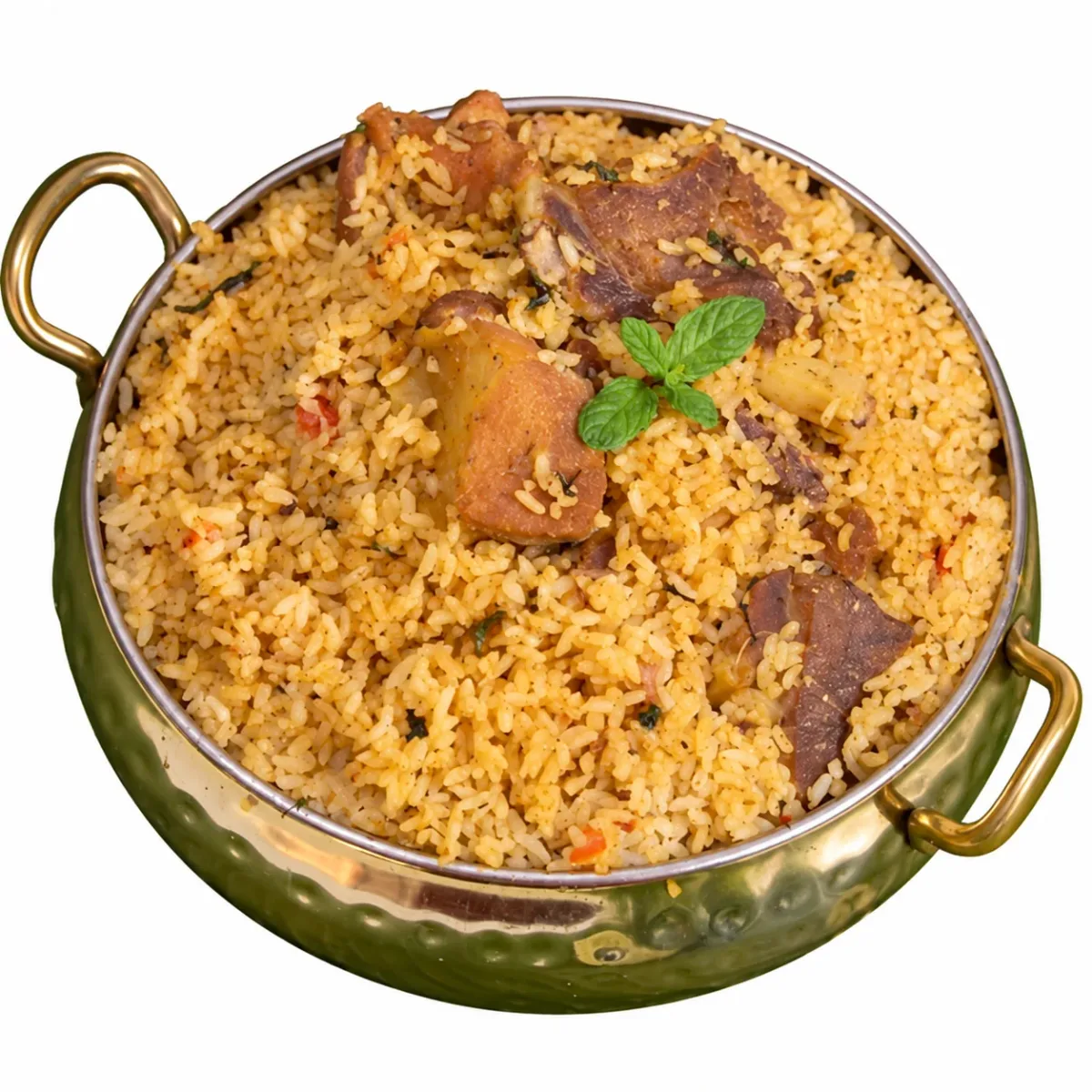
Thalapakatti mutton biryani
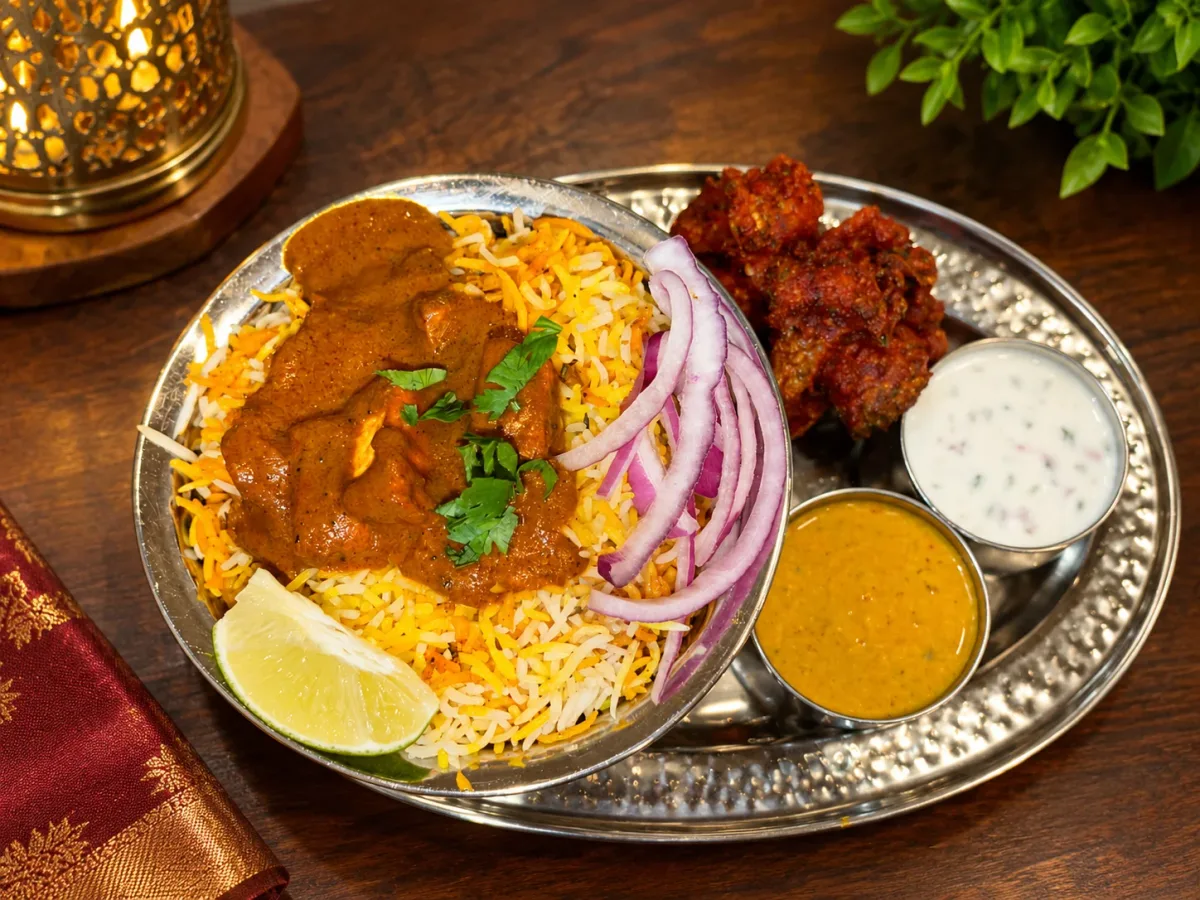
Vijayawada paneer biryani
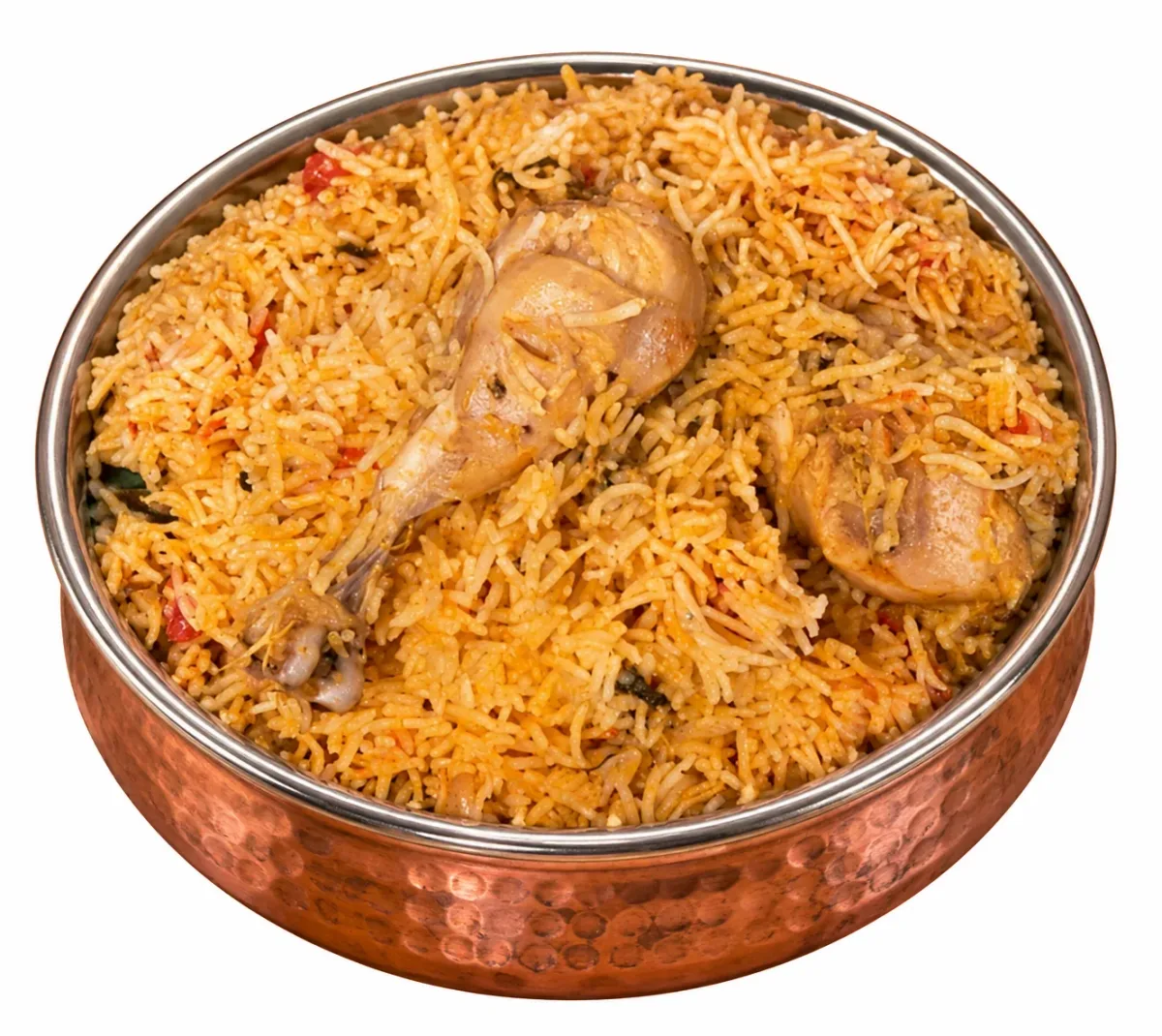
Bhai Veetu chicken biryani